The Authority and the Instrument
When Edward I decided that the drowning of Old Winchelsea required a replacement, the initiative was royal and the pace was urgent. What the Crown provided was authority: the right to seize a site, compel a survey and issue the terms on which plots would be held. What it needed next were men who could translate that authority into stakes driven into the ridge.
The officer typically given that work in an Edwardian new town was a keeper or custos — someone appointed to oversee the laying-out and then, often, to manage the early years of the settlement. At Winchelsea, the process was supervised by commissioners acting under direct royal instruction. The surveyor's tool kit was simple: a measuring rod, a line, and the geometry of a right angle. A rectilinear grid requires nothing more elaborate, and the evidence of how that grid meets the actual slope of the ridge shows the limits of the method as clearly as its ambitions.

The thirty-nine quarters recorded in the rental document of 1292 represent the grid as it was conceived before the town had fully settled into it. A quarter — a block — was the unit of allocation. Plots within each quarter were measured and assigned; streets were left as the spaces between. There was no mystery to the arithmetic, but the work of fixing it all on uneven ground, under time pressure, with displaced residents watching, was not trivial.
Chronology
3 entries · in order- 1280sstorms destroy Old Winchelsea on the shingle; decision taken to found a new town on the ridge at Iham
- 1292rental document records the thirty-nine quarters of the grid by name, giving the earliest detailed snapshot of the plan
- 14th centuryFrench raids and harbour silting begin to reverse the town's growth
Persuasion and the Plot
Decree alone does not fill a town. The Crown's leverage was real — the old site was going under water regardless, and residents of Old Winchelsea had nowhere else to move — but compulsion was matched by inducement. A burgess plot in a new royal town came with a burgage tenure: a fixed annual rent, hereditary right and freedom from many of the obligations that burdened rural landholders. You paid your rent, you stayed, you traded. The terms were legible and enforceable in a way that suited merchants.
Winchelsea's intended economy was specific: it was to be a Cinque Port, liable for ship service and entitled to the privileges that came with it. The wine trade from Gascony made deep cellars worth building, and the harbour, while it lasted, made the whole proposition viable. The relationship between that trade and the underground infrastructure the burgesses built beneath their plots is the clearest material evidence of people actually committing to the plan — digging into the sandstone at considerable expense because they expected to be there long enough to recoup it.
Key terms
Words used in their local sense| Term | What it means here |
|---|---|
| Burgage tenure | the standard landholding of a planned medieval town: a plot held for fixed annual rent, with hereditary right and personal freedom, in exchange for residence and trade |
| Quarter | the Winchelsea term for a grid block; thirty-nine were laid out, most never fully built |
| Custos / keeper | the Crown-appointed officer typically charged with supervising the laying-out of an Edwardian new town |
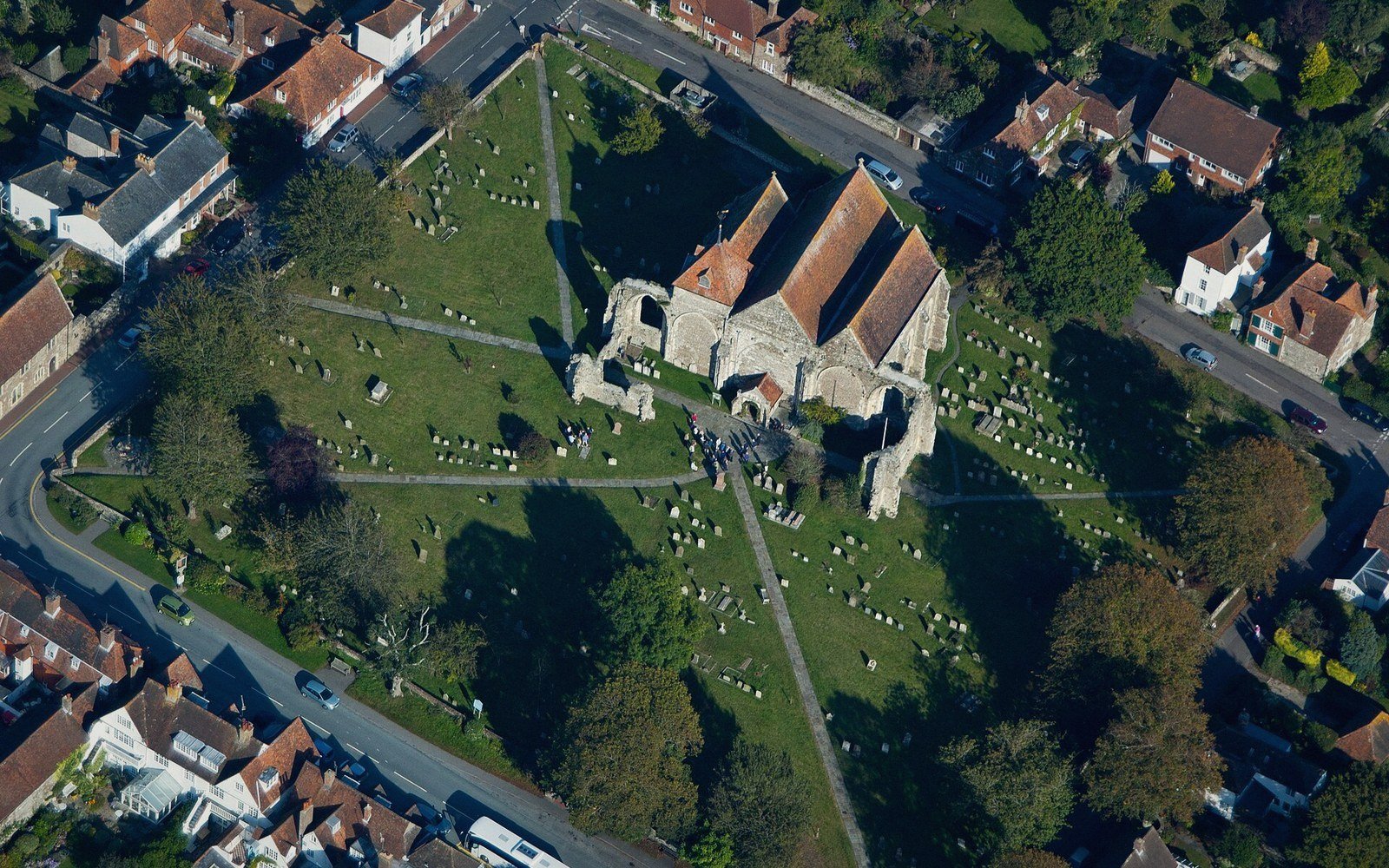
The machinery was, then, a combination of royal compulsion, surveyed geometry and economic logic. What it could not guarantee was that the town would remain worth inhabiting. The raids of the fourteenth century, the progressive failure of the harbour, and the mortality of the plague years all meant that the population the plan was drawn for never fully arrived — and those who did arrive began, within a generation or two, to contract toward the centre. The outer quarters were measured, allocated, probably built on in a small way, and then quietly abandoned. Their boundaries are still legible in the grass.
A king orders a town, commissioners fix the lines, burgesses accept the plots. That is the mechanism. Whether it produces a living place depends on everything the plan cannot control: trade, weather, war and the slow creep of silt across a harbour mouth.