The Shape of the Shrinkage
Winchelsea was laid out in the 1280s across a ridge above the marsh: a grid of thirty-nine quarters, each subdivided into building plots, projected onto ground that had never held a single house. The ambition was explicit — this was a planned replacement for a port town swallowed by the sea, and its founders drew it large enough to hold a substantial trading population. What actually arrived was always fewer people than the plan assumed, and what remained after the fourteenth-century French raids, the silting of the harbour and the plague was fewer still.
The contraction did not happen all at once. The outer quarters — those furthest from the church of St Thomas the Martyr, toward the edges of the ridge — were probably never densely settled. The 1292 rental records plots let and plots not yet taken up, which suggests that even at the town's earliest moment some portions of the grid were optimistic rather than occupied. But the real emptying came across the following century. By the time the harbour had closed and the wine trade had gone, there was simply no economic reason for a large population to remain on a hill with no port. People left, plots reverted, and the streets that had been laid out between them stayed as boundaries while everything inside them became grass.
Where the Town Retreated To
What survives as lived town today is a cluster around the church and the square, occupying perhaps a third of the original grid. The quarters to the north and east — where, on the original plan, whole neighbourhoods were anticipated — are now agricultural land or open ground. Walk them and you find the geometry still present as earthworks: slight ridges that follow old property boundaries, hollow ways that track the line of streets recorded in the medieval surveys, and the occasional right-angle change in a field edge that makes no sense in farming terms but makes perfect sense as a plot corner. The plan did not disappear; it subsided into the soil.
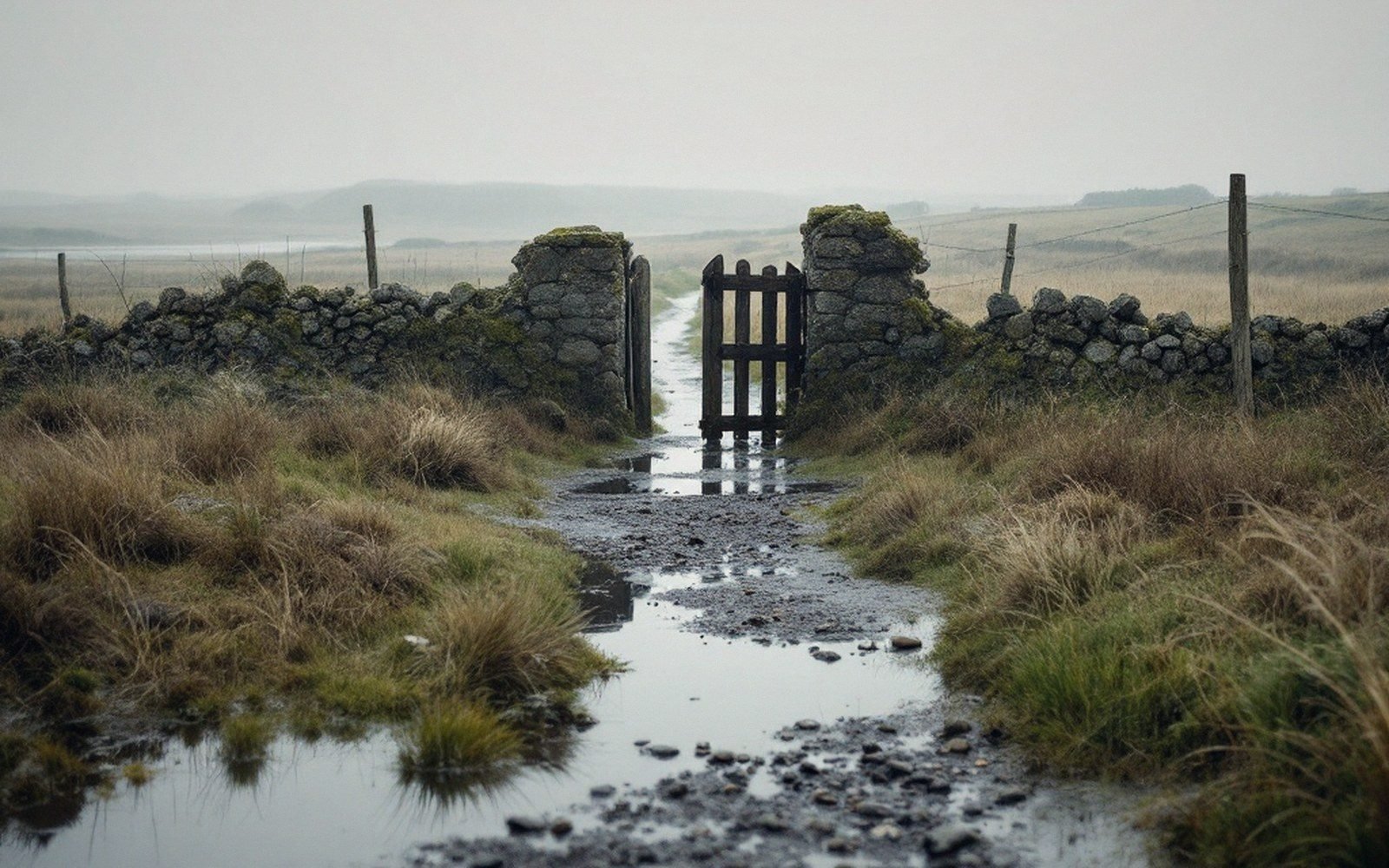
The gates are the most disorienting evidence. The Strand Gate, the Pipewell Gate and the New Gate still stand — or two of them do — at the margins of a town that no longer extends to meet them. They were built to control the entries to a populated place; they now stand in or beside empty ground. A gate that leads into a field is a powerful document of contraction.
Chronology of contraction
5 entries · in order- 1280sgrid laid out across the ridge; town projected at full scale
- 1292rental survey records some plots already unlet at foundation stage
- 14th centuryFrench raids, harbour silting and plague reduce population
- Later medievalouter quarters revert to grass; street lines remain as earthworks
- Presentoccupied town clusters around church and square; roughly one third of the original grid
The church is equally eloquent. St Thomas the Martyr was planned and partly built at a scale appropriate to a prosperous port parish. What stands now is the chancel and transepts; the nave was never completed, or was built and lost, and the west end simply stops. The building is already inside a town that shrank — and even that building is larger than the community that has used it for most of its existence.
The Plan as a Ghost
This is what makes Winchelsea genuinely unusual: the plan is still legible at the scale of the whole town, not just in fragments. Most medieval settlements that contracted did so without a geometric framework to betray the absence — the empty ground looks simply like countryside. Here, you can stand in the square and orient yourself against a grid drawn in the 1280s, then walk out along the roads it established to reach quarters that were never built, or built and abandoned so early that nothing above the soil remained. The earthworks and boundary lines in the outer quarters reward a slow walk precisely because you are reading what was intended against what exists — and the distance between the two is the history of the town.
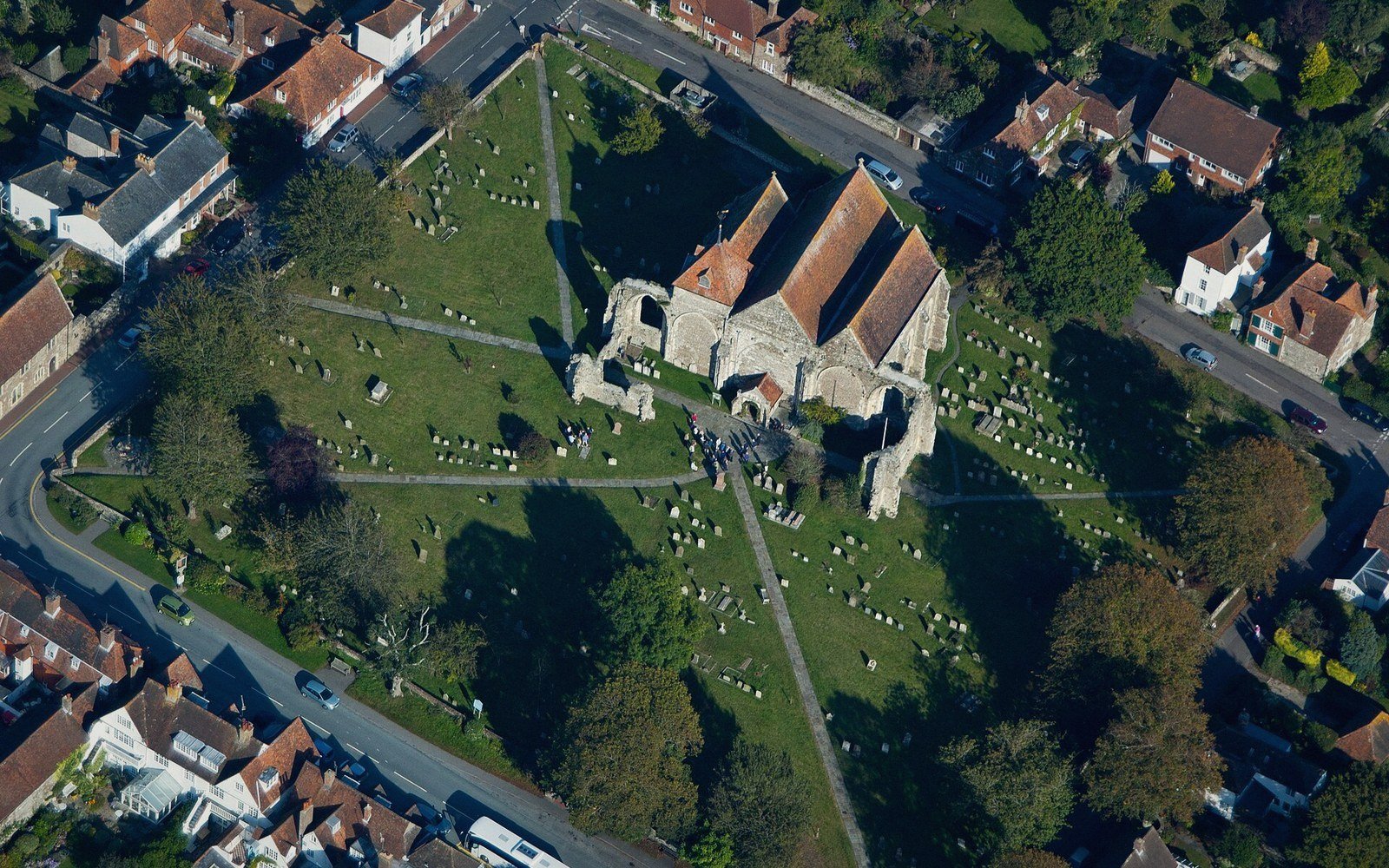
The occupied area contracted toward its own centre, and the plan stayed. Winchelsea is not a ruin. It is a full-sized drawing with only some of it coloured in.