A town that could not be defended
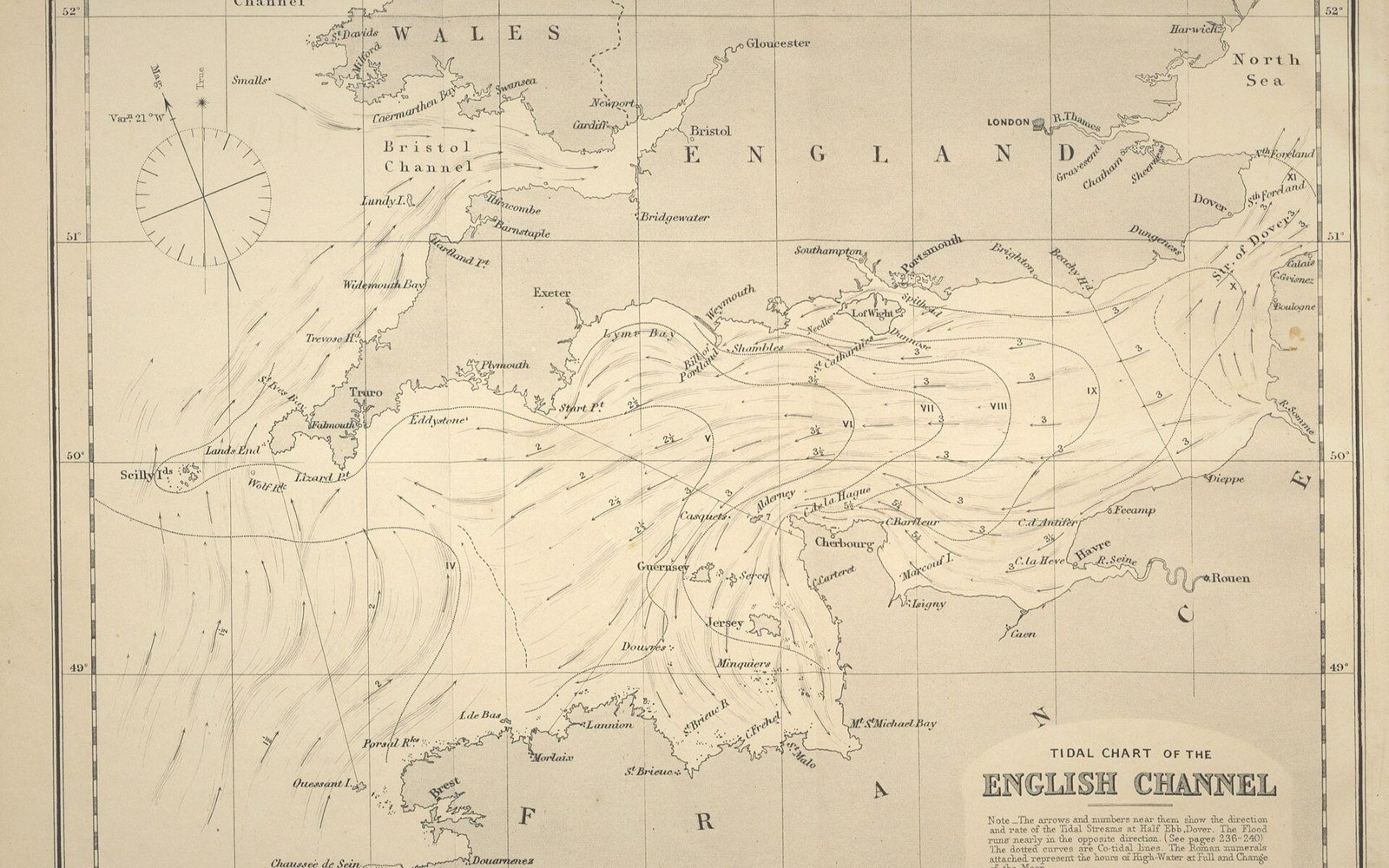
Winchelsea was built to last. Edward I's engineers laid it out on a grid above the cliff in the 1280s, planned with the deliberate care of a royal foundation: straight streets, measured plots, a great church to anchor the centre. Within a generation, French and Castilian raiders had reduced large parts of it to ash.
The raids of the fourteenth century are sometimes treated as a colourful footnote to Winchelsea's history — a sequence of dramatic episodes from which the town eventually recovered. The evidence does not support that reading. The attacks were episodic but cumulative. Each one interrupted trade, killed or drove away inhabitants, and deepened the contraction that left two thirds of the grid as grass. Winchelsea after the raids was a smaller, diminished place, and it never grew back.
What the records say
A serious attack came in 1360, when a French force landed and burned much of the town. The raid was not a skirmish: it was destructive enough to appear in subsequent petitions to the crown and to enter the documentary record as a moment of real rupture. The chronicler Froissart noted the French attack on Winchelsea in his account of the period, though his figures and details should be treated with the caution owed to any medieval military chronicler. What the documentary record — petitions, tax rolls, and exchequer accounts — confirms is that the town's ability to pay taxation dropped sharply in the period following, and that physical destruction was offered in explanation.
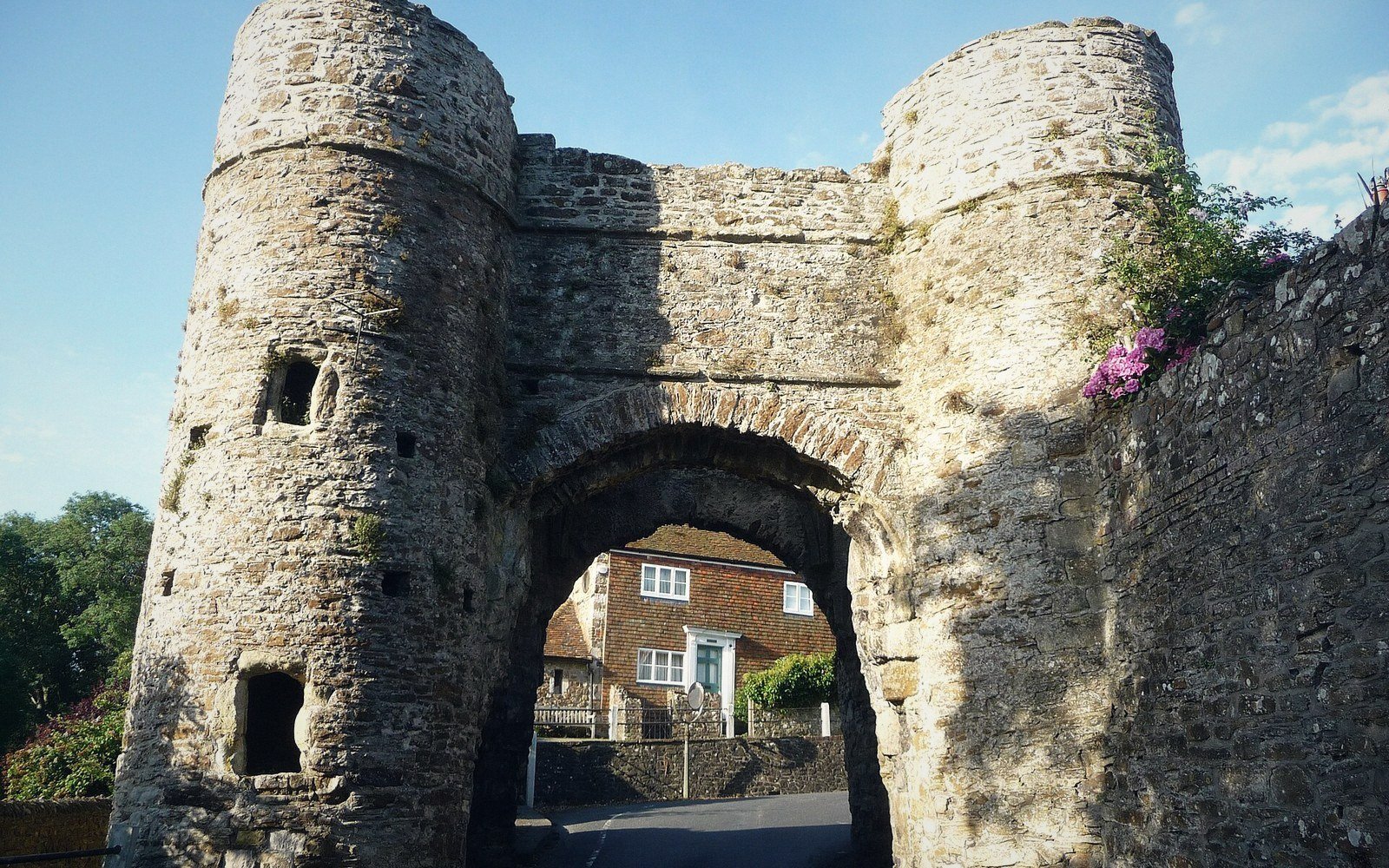
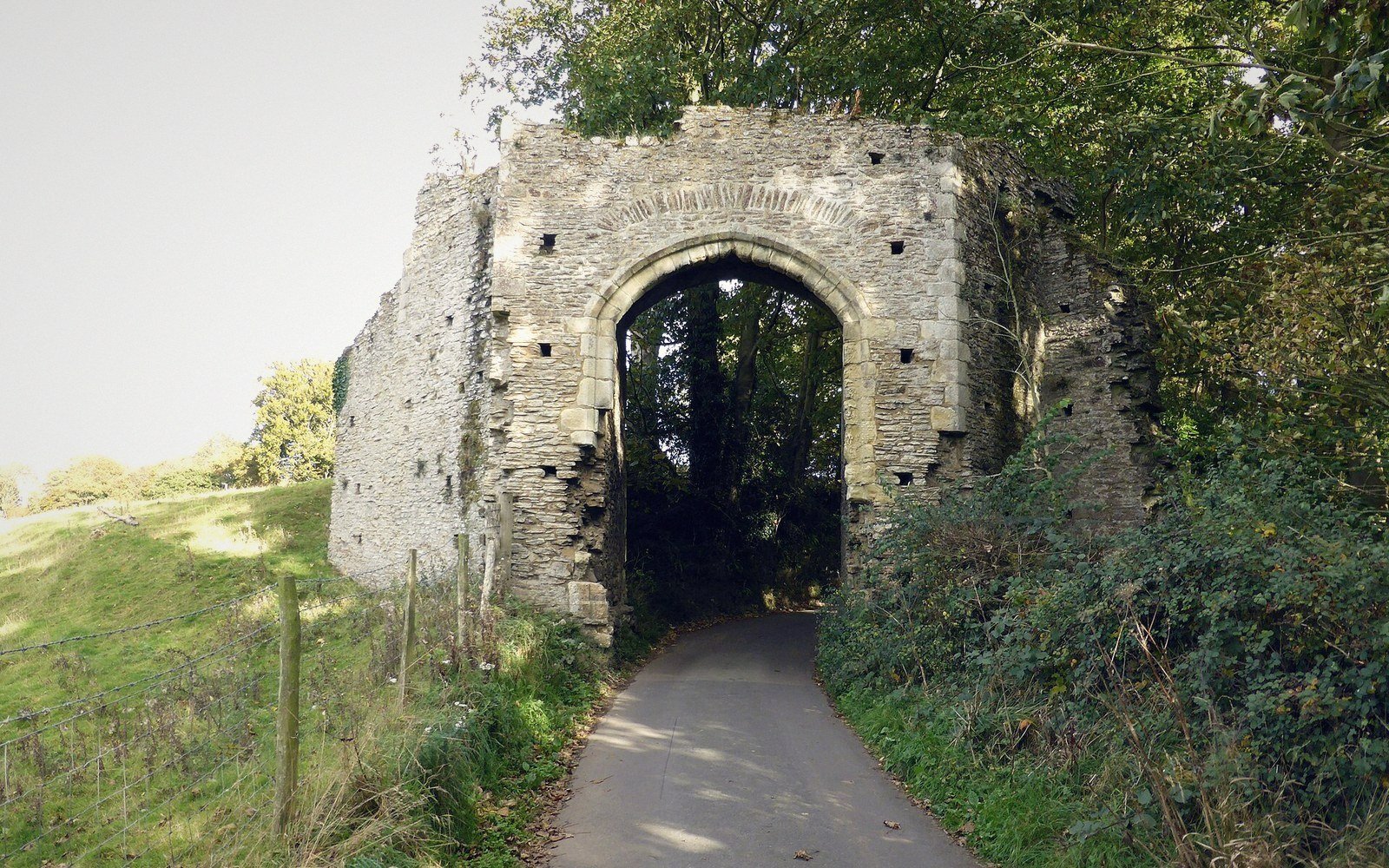
The 1360 raid was preceded by French and Genoese attacks during the 1330s, when Winchelsea and its near neighbour Rye were hit more than once during the opening decades of the Hundred Years War. The town's position was its problem. It stood at the edge of the Sussex coast, close to the sea while it still had a functioning harbour, visible from the channel and reachable by a hostile fleet that could land at the Strand and be in the streets within the hour. The three gates that survive — the Strand Gate, the Pipewell Gate and the New Gate — were not part of a completed defensive wall. The wall circuit was begun but largely not built, which meant that the town's most impressive stone entrances opened onto open ground rather than a continuous enceinte. Attackers who bypassed the gates, or took them quickly, found the interior essentially unprotected.
In 1377 the town was attacked again, this time severely. A French and Castilian fleet — operating in the same season that burned Rye and Hastings and harried the Sussex coast more generally — landed at Winchelsea and caused destruction that contemporary accounts describe as extensive. The prior of the Franciscan friary was reportedly killed during the attack. The friary itself, which had stood in the south-eastern quarter of the grid, did not long survive as a functioning house: whether destroyed in this raid or finally undone by the accumulated damage of the period is not entirely clear, but it disappears from the record as an active institution in the following decades.
Chronology of major raids
4 entries · in order- 1330sFrench and Genoese attacks during the opening phase of the Hundred Years War; Winchelsea and Rye both hit
- 1360Major French raid; documentary record records significant destruction; tax-paying capacity declines in subsequent returns
- 1377French and Castilian fleet; prior of the Franciscan friary reportedly killed; Rye and Hastings also burned in same season
- 1380Final serious raid of the sequence; cumulative damage to population and trade by this point severe
The raid of 1380 completed the sequence of the worst years. By that point the town had been attacked seriously at least four times in half a century. The cumulative effect on population, on property values, and on the willingness of merchants to maintain stock and cellars in a town that might be burned again is not hard to imagine, and the tax evidence reflects it.

What was lost
Trade is the key measure, and the figures on trade tell a stark story. Winchelsea had been among the busiest wine-import ports in England in the late thirteenth and early fourteenth centuries. The Gascon wine trade that had filled its vaults and made its merchants prosperous was not a casual business: it required capital, secure storage, and a predictable return on investment. The stone-vaulted cellars beneath the plots were built because wine demanded that kind of infrastructure. After the raids, the customs accounts show a sustained decline in imports through the port. The decline cannot be attributed to the raids alone — the harbour was silting throughout the same decades — but the raids removed the merchants and disrupted the trading networks at precisely the point when the harbour troubles would have made continuity of trade most difficult to maintain.
Population loss followed directly from the raids and indirectly from the flight of commerce. The population that never arrived to fill the outer quarters of the grid was one thing: those quarters had been sparse from the beginning. What the raids accelerated was the abandonment of quarters that had been occupied. Excavation and field survey of the outer grid show the traces of buildings — hearths, floor surfaces, plot boundaries — that were not replaced after destruction. Where a fire in a stable English market town might prompt rebuilding, fire in Winchelsea in the 1360s or 1370s more often prompted departure. The people who left were not necessarily lost to the region: Rye, despite its own damage, recovered more completely because its harbour held. Winchelsea's did not.
The church of St Thomas the Martyr, which was itself never completed to its planned scale, shows something of the same arc. The nave was never built — or if begun, never finished — and the building that stands today is essentially the chancel and transepts of what was intended to be a much larger structure. Whether the raids directly interrupted any building programme at the church is not documented with precision, but the fourteenth century was not a period in which a depleted and periodically burned town found resources for major ecclesiastical construction.
Aftermath
The raids did not destroy Winchelsea in a single catastrophic event. They wore it down in instalments. Between attacks, life continued: the market functioned, wine still came in while the harbour permitted, the courts sat, the Cinque Port obligations were met as best they could be. But the floor of activity lowered with each decade, and the intervals between recovery and the next disruption grew shorter than any merchant calculation could comfortably bridge.

By the early fifteenth century, Winchelsea was already the diminished, contracted settlement it essentially remains: a small town occupying perhaps a third of its planned grid, with the rest reverting slowly to pasture and earthwork. The raids had done their work not by erasing the place but by making the gamble of staying and rebuilding seem less rational than the alternative. The grid remained. The streets held their lines. The surviving gates stood in open country where walls had never come. And the quarters that had once been streets of merchants fell quiet in a way that no subsequent century reversed.