Two stones that outlasted everything around them
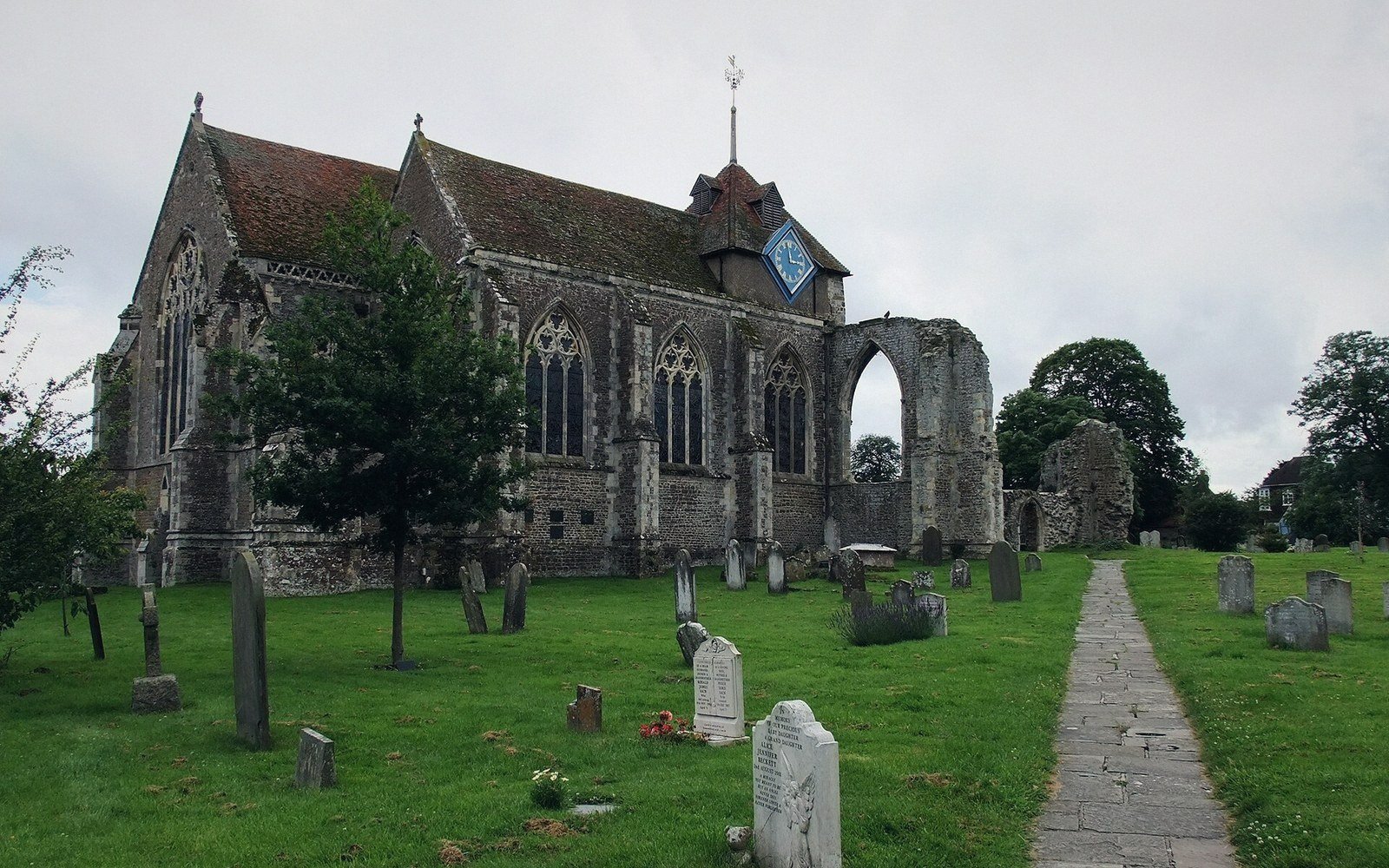
In the north and south walls of the chancel of St Thomas the Martyr stand two canopied tomb recesses that have no business being as significant as they are. Winchelsea never became the great port its founders planned; the church was never given the nave it was planned with. Yet here, in a truncated building in a shrunken town, survive two of the earliest and finest canopied tomb recesses in England — monuments to the family that, for two or three generations, effectively ran the port.
The Alards were Gascony-trade merchants and royal naval administrators rolled into one. The family held the office of Admiral of the Cinque Ports during the reign of Edward I and Edward II, an appointment that in practice meant organising the fleet levies the ports owed the crown. Gervase Alard, recorded as the first Admiral of England in some sources, and his kinsman Stephen Alard between them represent the peak of the family's power — the moment when Winchelsea's wine trade, its ship-service obligations, and its proximity to the French coast made it genuinely matter to the English crown.
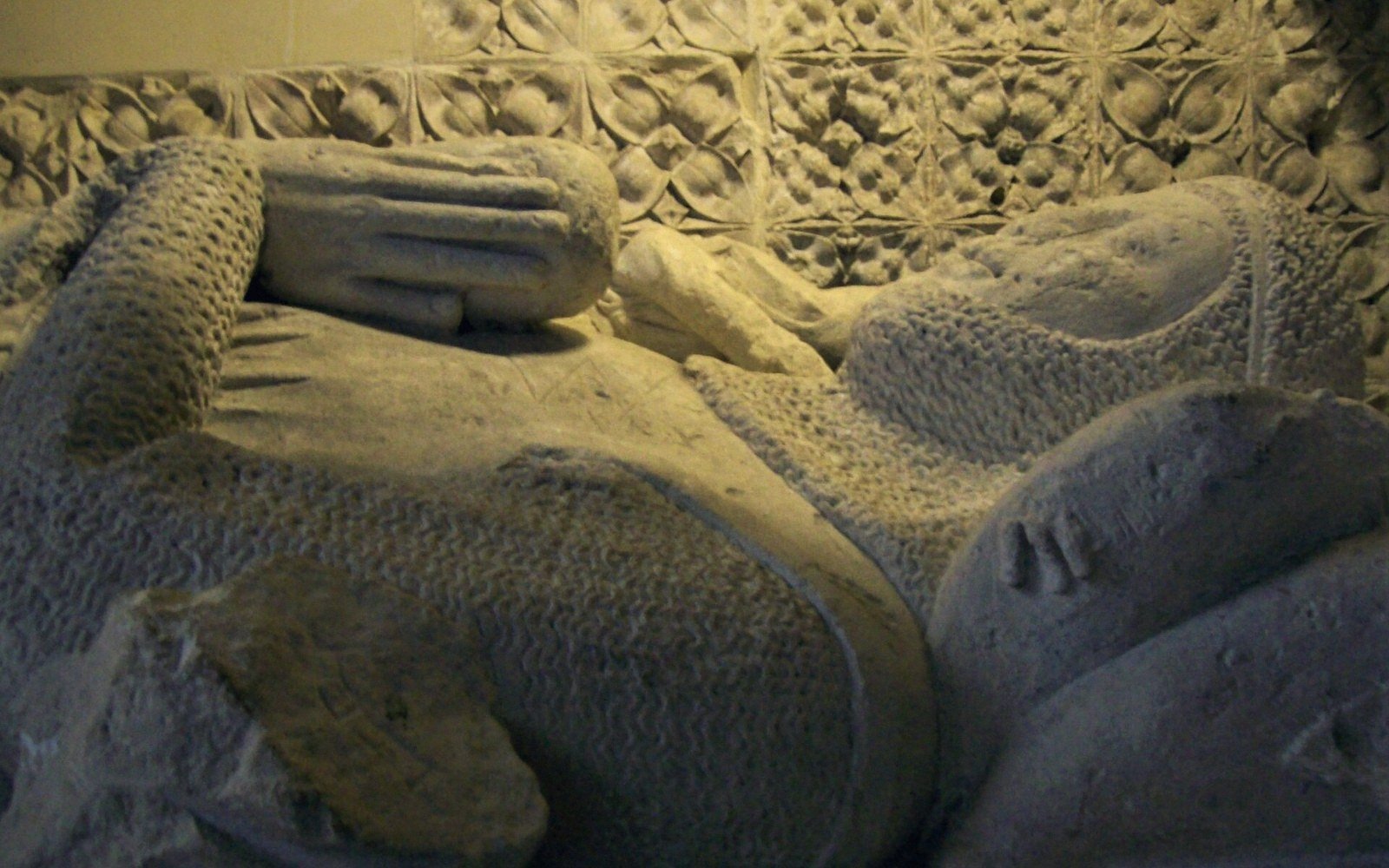
The tomb in the south chancel wall is attributed to Gervase. It dates to the first decade of the fourteenth century. The canopy is carried on clustered shafts and rises to an ogee arch — the ogee being the double-curved form that became fashionable in English Gothic during precisely this period, and here it appears early and confidently handled. The cusping within the arch is crisp where it survives. The effigy beneath shows a knight in armour, cross-legged in the convention of the era, though the significance once attached to that pose — crusading intent — is now considered more formulaic than biographical. What is not formulaic is the quality of the stone carving and the sophistication of the canopy design, which places this monument in the same tier as the better-known tomb recesses in Westminster and the great Cistercian abbeys.
The north tomb is attributed to Stephen Alard and is broadly contemporary, though it reads as the more restrained of the two. The canopy arch is less elaborated, the overall composition tighter, but the execution is no less accomplished. Together the pair frame the chancel and make unmistakable the family's intention: these are not modest parish memorials but statements of status by people who expected their building to be completed around them.
Chronology
6 entries · in order- c. 1280sNew Winchelsea founded on the hill; St Thomas the Martyr begun
- c. 1300–1310South chancel tomb (attributed to Gervase Alard) carved
- c. 1300–1310North chancel tomb (attributed to Stephen Alard) broadly contemporary
- Gervase Alardrecorded as first Admiral of England; held office under Edward I and Edward II
- 1340s–1350sFrench raids and plague; building work on the nave effectively ceases
- —The nave was never completed; chancel and transepts are all that survive
That completion never came. The nave of St Thomas was apparently begun and then work stopped — probably in the 1340s and 1350s, when the French raids and the plague between them broke the town's momentum. What survives is the chancel and transepts, a torso of a church, and within it these two monuments that were always intended to anchor a much grander interior.
What they reveal
The tombs are evidence of more than personal piety or family pride. Stone canopied monuments on this scale required either a London workshop or a master carver travelling from one. They cost what a merchant family at the height of its prosperity could afford — and the Alards at their peak were not a minor dynasty. They held royal appointments, they traded in Gascon wine when Gascony was English, and they were well-connected enough to receive burial treatment otherwise associated with cathedral closes and royal foundations.
They are also almost accidentally well-preserved. The loss of the nave, catastrophic as it was for the town's ambitions, may have sheltered the chancel. The building that survived is compact and has been maintained. The Alards sit in it still, somewhat over-scaled for the congregation the church now serves, which is precisely the point — they were built for a town that was going to be much larger.
For anyone standing in the chancel, the monuments are immediately arresting: the dark Bethersden marble of the effigies against the pale stone of the canopy arches, the ogee curves of the fourteenth century as legible now as the day they were cut. They are routinely under-visited because Winchelsea is itself under-visited, and because there is no obvious narrative frame offered at the door. The frame is simply this: two of the earliest surviving canopied tombs in England, in a truncated church, in a town that never reached its intended size, commemorating the family that held the most important maritime office the region produced. That is enough.