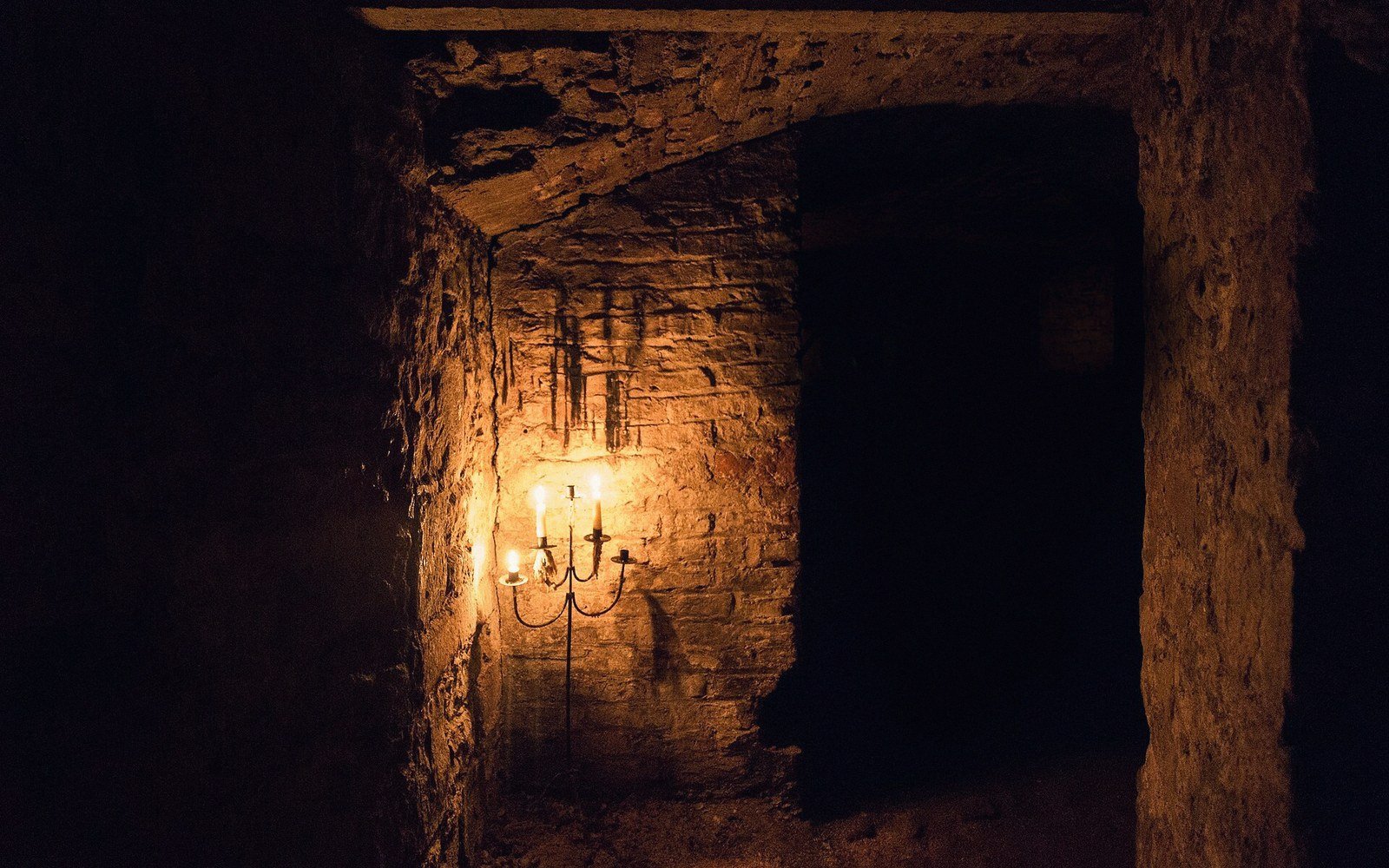
A town underground that outlasted the town above
Winchelsea's medieval prosperity left one category of evidence that raids, silting and contraction could not erase: the cellars. More than thirty survive in recognisable form beneath the plots of the upper town — stone vaults cut partly into the local sandstone, partly built up in coursed masonry, and in several cases large enough that a modern visitor standing inside one has no instinctive sense of being underground at all. They are the most concentrated survival of medieval commercial infrastructure in any English town of comparable size, and they tell a story about the wine trade, about what the planned grid was actually built to do, and about the gulf between the surface Winchelsea you can walk today and the port it briefly was.
The context matters. When Edward I authorised the replanning of Winchelsea on the ridge above the Brede estuary in the 1280s, the grid of thirty-nine quarters was not a speculative gesture. Old Winchelsea was already lost to storm surge, and the new town was laid out to receive a specific, established trade: Gascon wine moving north from Bordeaux toward English and Flemish markets. This was not a secondary function. The port existed, in large part, because of wine, and wine required vaulted, temperature-stable, secure below-ground storage. The cellars were not an afterthought once the plots were settled. They were, in a practical sense, the point.
What was built and how
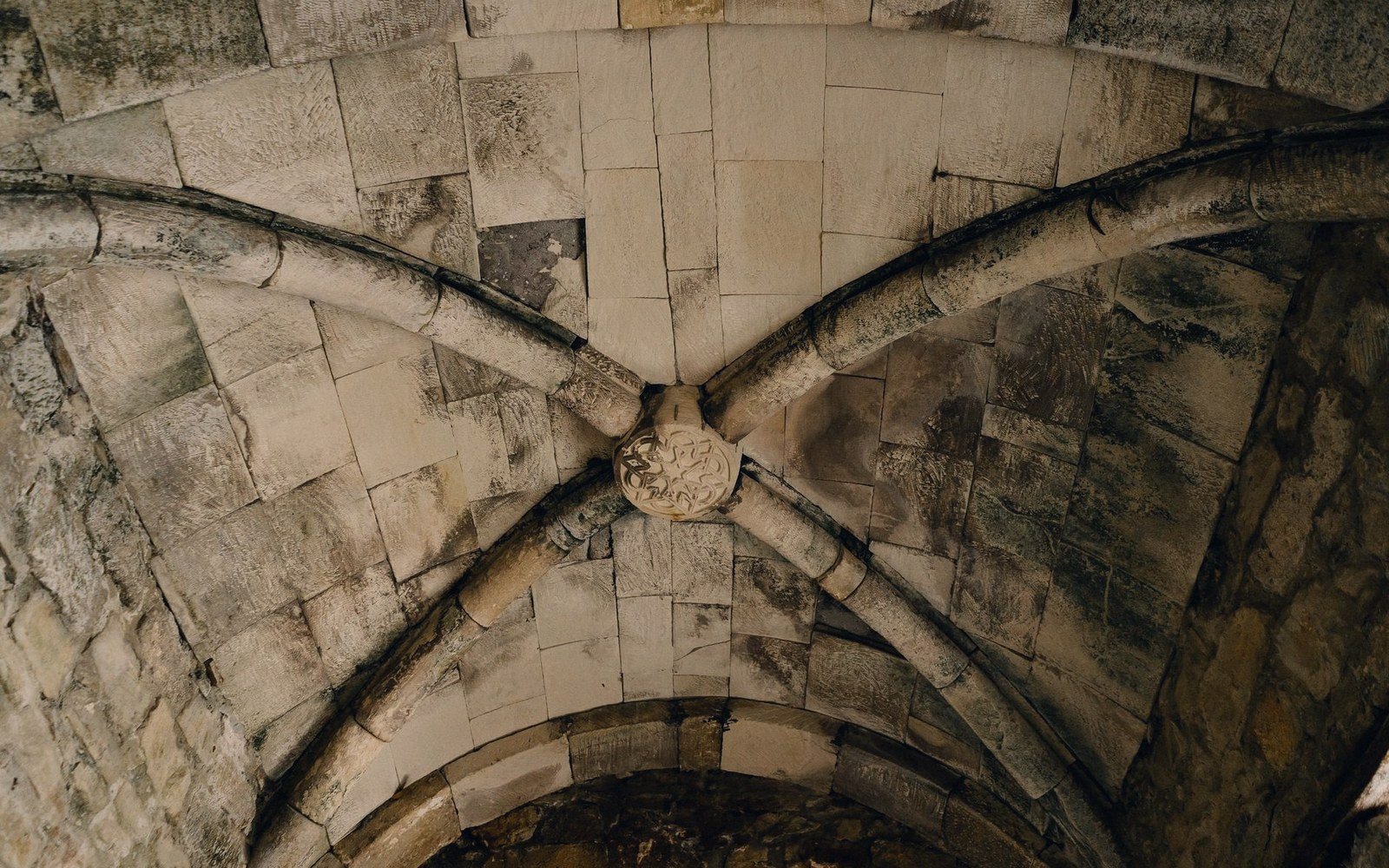
The typical Winchelsea vault is a barrel-vaulted or sometimes rib-vaulted chamber running beneath the rear portion of a plot's ground floor, accessed by a stair from inside and in some cases by a separate external entrance that allowed casks to be rolled in from the street or yard without disturbing the hall above. The walls are a mixture of roughly coursed sandstone — the local Hastings Beds material that the ridge is made of, soft enough to cut with hand tools — and more carefully laid rubble. The better-finished examples have dressed stone around doorways and springer courses for the vaulting. A few retain the cut bedrock as their floor, which places the depth of excavation beyond what was strictly necessary for construction and confirms that the primary requirement was thermal: a steady cool temperature for stored wine.
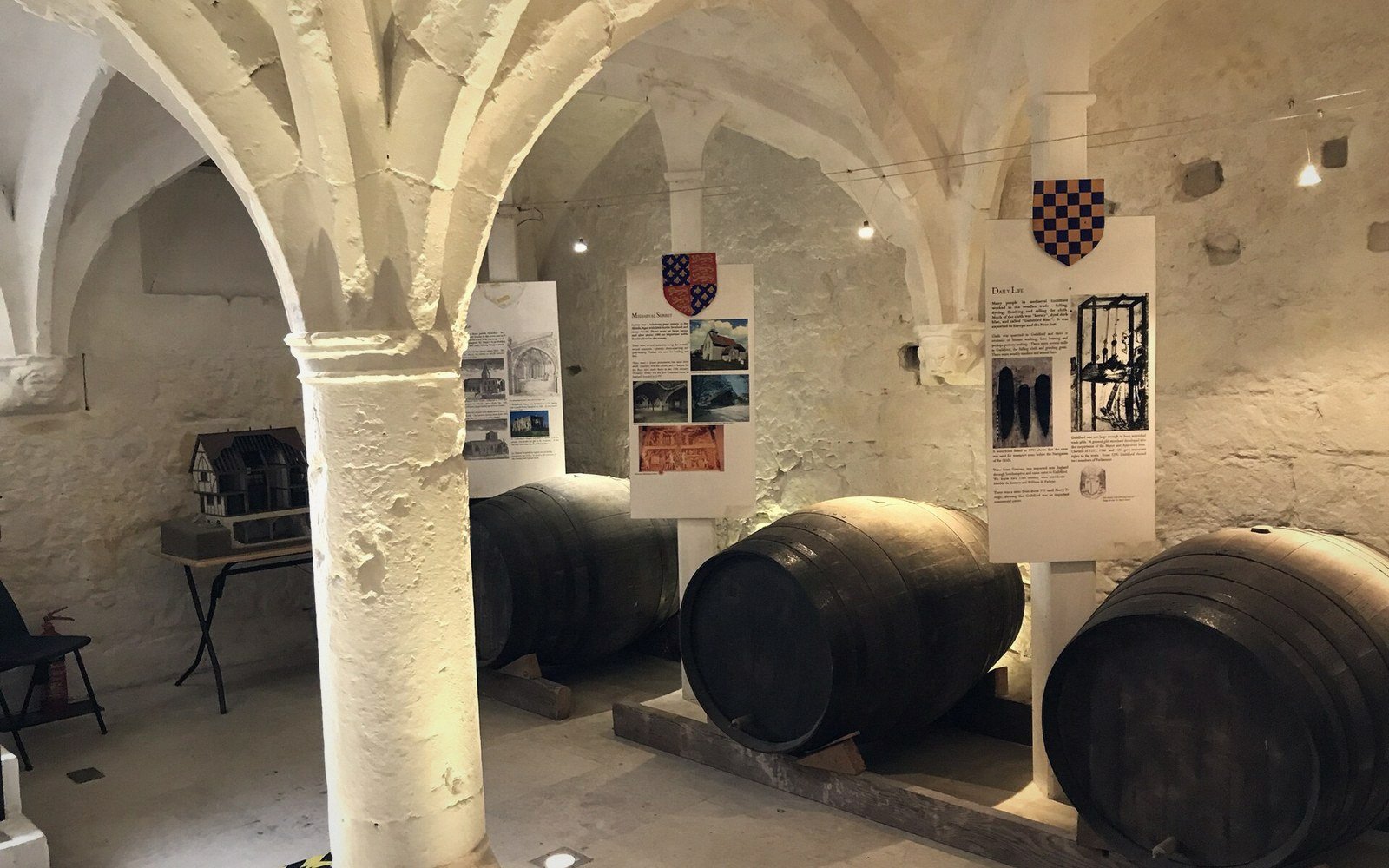
Size varies, but the larger vaults are substantial. Some run to four bays of vaulting, with clear heights sufficient to stand upright throughout, and internal widths that could accommodate multiple rows of casks laid on their sides in the French manner. These are not domestic wine stores incidentally dug under a private house; they are commercial cellars designed for throughput — for receiving, holding and dispatching quantities measured in tuns and pipes rather than barrels. The sheer volume of storage implied by the surviving cellars, taken together, points toward a quayside economy operating at a scale the present town gives no hint of. The town you see above ground now is a shrunken remnant; the vaults record what it was.
Dating individual examples is not straightforward and requires the kind of close reading that rib profiles, springer details and doorway mouldings can provide. The majority of the surviving cellars appear to belong to the late thirteenth and early fourteenth centuries — consistent with the foundation of the planned town and its period of greatest activity before the French raids and the onset of harbour silting began to erode the port. Several show blocked openings or repurposed stairs that suggest later modifications as the buildings above changed function: a commercial cellar that saw its wine trade vanish did not disappear; it was converted to storage of other kinds, sometimes sealed, sometimes reopened. A few have been pressed into service as parts of domestic properties down to the present day.

The concentration and what it means
Thirty-plus surviving medieval vaults in a town whose current population is a few hundred people is, by any measure, extraordinary. It becomes more explicable when you understand two things: the nature of the material, and the nature of the plan.
Sandstone is durable and does not collapse in the way that a timber-framed cellar eventually does. A vault once properly built in the Hastings Beds stone requires active destruction to remove; neglect will not finish it in any human timescale. This is why so much survives when so much else — the commercial buildings above, the wharfage below, the population itself — has gone. The underground town is better preserved than the above-ground one precisely because it was built in the right material.
Chronology
5 entries · in order- 1280sOld Winchelsea lost; new town authorised on the ridge above the Brede
- 1292Rental records the grid and its commercial tenants shortly after foundation
- Late 13th–early 14th centuryMain period of vault construction, tied to peak Gascon wine trade
- 1337 onwardsFrench raids begin; harbour silting accelerates over subsequent decades
- 1453English control of Gascony ends; Gascon wine trade collapses as a systemic force
The plan matters equally. The rental of 1292 records the grid when it was freshly occupied, and the pattern of plots it describes is one in which commercial tenants — merchants, wine traders, ship-owners with interests in the Gascon trade — held the larger quarters close to the streets leading down toward the Strand Gate and the quays. These were the plots where investment in substantial below-ground infrastructure made economic sense. A merchant handling significant quantities of wine would sink real money into a vault because the vault was a working asset: it enabled him to buy in bulk when prices were right and sell forward when they rose, to age wine where necessary and to store it through the shipping seasons. The concentration of vaults in the surviving parts of the town reflects, in rough form, the commercial geography of the medieval port.
What the vaults cannot tell us, or cannot tell us directly, is the full extent of what was once built. The outer quarters of the grid — those that were never substantially occupied or that were given over to agricultural use within a generation or two of the foundation — show little trace of below-ground construction, which is consistent with those plots having never reached the commercial development that would have justified a vault. The surviving cellars cluster toward the occupied core, where the surface buildings, however reduced, maintained some continuity. In the quarters that returned to grass, any preliminary excavations simply filled in or were never made.
The wine trade they were built for
To stand in the larger vaults and understand them properly, you need to hold in mind what the traffic was. Gascon wine — produced in the Bordeaux region under English rule from the mid-twelfth century until 1453 — was shipped north through English Channel ports, and Winchelsea was one of the principal points of entry. The ships involved were substantial for their era; the tun, the standard large cask, was the unit from which ship tonnage was originally calculated, because a ship's carrying capacity was literally measured by how many wine tuns it could hold. The merchants handling this trade were not small operators. They were connected to Florentine and Gascon trading networks, they dealt in quantities that required capital, and they needed secure, accessible bulk storage close to the quays.
The vaults are the fixed infrastructure of that system. They are the piece of the wine trade that did not move on when the harbour silted and the ships stopped coming. Everything else — the quays, the cranes, the counting-houses, the lodgings for foreign merchants — has gone. The vaults alone remain because they were cut into the rock and could not be easily dismantled or carted away, and because they found secondary uses sufficient to keep them nominally in use or at least undemolished.

Walking the town above them now, it takes some effort to reconstruct the sense of commercial density they imply. The streets are quiet; many of the plots are gardens or open grass; the scale of St Thomas the Martyr hints at ambition that was never fulfilled above ground. But go down a vault stair — into one of the properties that allows access, or into the cellars that are periodically opened for inspection — and the volume of the spaces pushes back against any idea of Winchelsea as always a small town. This was, for several decades in the late thirteenth and early fourteenth centuries, a serious port doing serious business. The sandstone vaults, cool and barrel-curved in the dark beneath the ridge, are what serious business looked like.